
Modernization of Capitalism
- Jim Zimmerman

- Sep 29, 2024
- 4 min read
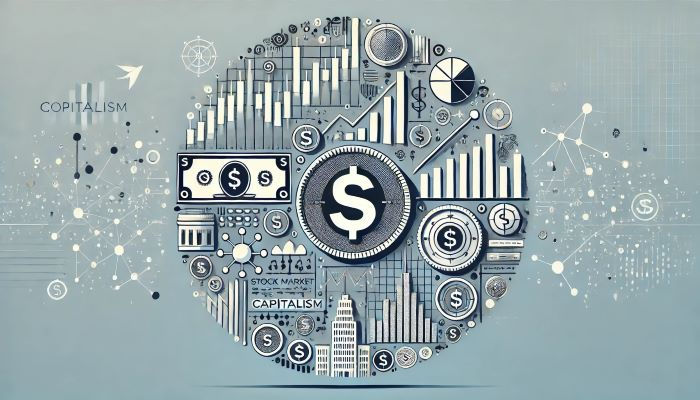
Clearly, capitalism, has fueled human progress. Explosive economic growth and advancements in science and technology over the past 150 years has led to a sustained and phenomenal reduction in human suffering.
However, there are serious even grave social and environmental problems being created because of the excesses of capitalism. These problems stem from the fact that capitalism has one and only one metric to measure success: maximizing profit in the shortest amount of time.
There is nothing in the credo of capitalism that says, treat your workers well, create products that don’t pollute, give back to your communities, protect our natural resources or be responsible for workers whose jobs are lost to rapid advancements in automation. Its only command, make us much money as fast as you can.
Ray Dalio, the billionaire founder of Bridgewater Associates, a mega-hedge fund, believes capitalism needs to be reformed.
“I have also seen capitalism evolve in a way that it is not working well for the majority of Americans because it’s producing self-reinforcing spirals up for the haves and down for the have-nots.
This is creating widening income/wealth/opportunity gaps that pose existential threats to the United States…
I think that most capitalists don’t know how to divide the economic pie well and most socialists don’t know how to grow it well, yet we are now at a juncture in which either a) people of different ideological inclinations will work together to skillfully re-engineer the system so that the pie is both divided and grown well or b) we will have great conflict...
I believe that all good things taken to an extreme can be self-destructive and that everything must evolve or die. This is now true for capitalism.”
As a society we can and must rethink and modernize our economic system to new standards that maximize the benefits of a free market by expanding the metrics of success to include rewarding products, services and other economic activities that reduce financial inequities, facilitate the conversion to renewable energy and regenerative processes, improve overall wellbeing and increase sustainable production capacity.
The overarching objective is to modernize capitalism so that business makes the most money when it both produces desired, competitive products that also serve the objectives of a greater social good.
“You never change things by fighting the existing reality. To change something build a new model that makes the existing model obsolete.” – Buckminster Fuller
Our present-day economic, governmental and social systems are not designed or prepared to deal with the profound and unprecedented 21st century rate of change. Business as usual will not cut it!
Two critically important 21st century facts, (1) Capitalism has a serious, must fix “Bug” and (2) democracy has the paralyzing partisan malfunction of Division, Dis-information and Distraction.
We have some crucial work to do. Beginning with capitalism.
Clearly, capitalism has served, fueling human progress. Explosive economic growth and exponential advancements in science and technology over the past century has led to a sustained and phenomenal reduction in human suffering caused by famine, plague and war.
In capitalism there is one and only one metric to measure success: maximizing profit in the shortest amount of time. There is nothing in the credo of capitalism that says, treat your workers well, create products that don’t pollute or poison, give back to your communities or don’t waste natural resources. Its only command, make us much money as fast as you can.
Capitalism on its own will externalize costs - businesses can ignore negative social and environmental impacts caused by their products or actions without assuming responsibility for the associated costs; i.e. abandonment of rural America, climate change, global resource depletion
Capitalism on its own trends toward ever increasing concentration of wealth; deepening income and wealth inequality exists naturally in unregulated technology-driven free markets; i.e. historic financial inequity
Capitalism on its own has no mechanism to prevent chronic unemployment, under-employment, the working poor and wage stagnation – accelerating automation will exacerbate this issue; i.e. multi-decade wage stagnation, low labor force participation, underemployment
Capitalism on its own allows the wealthy to have a disproportionate voice in government, weakening our democracy; i.e. citizens united, billionaire presidents, extreme gerrymandering
The metrics of capitalism must be consciously expanded to reward economic activities that devalues greed, balances the health of the whole with the wealth of the individual, creates environmental sustainability and restores the natural world.
As a society we can rethink and modernize our economic system to better ensure that we maximize the benefits for individuals, businesses, collective society, and for our planet.
Government as well requires a 21st century upgrade. America has a powerful foundation in our constitution. However, our government is unfortunately broken, thanks in large part to the extreme level of divisive partisan politics fueled by money and greed. We must fix it, government must become a robust part of the solution, one that we can all take pride in. The Guidelines:
A. Get Money out of politics replaced by informed, tech-powered voters, voters responsible for collectively and consciously setting the economic objectives for our future.
B. This must be done through modernized democratic and collaborative processes, based on clear values, principles and objectives.
C. The government will carry out the will of the people through laws, regulations, incentives, public-private partnership and treaties.
D. Replace the process of partisan gerrymandering with a non-partisan process, aided by algorithms designed to produce outcome that are fair rather than rigged.
E. The judicial branch has also become infected with hyper-partisanship. We must reexamine the way judges, to include supreme court justices are appointed and their terms.
F. We must take a fresh look at term limits with an eye on how we balance continuity with fresh ideas


Comments